


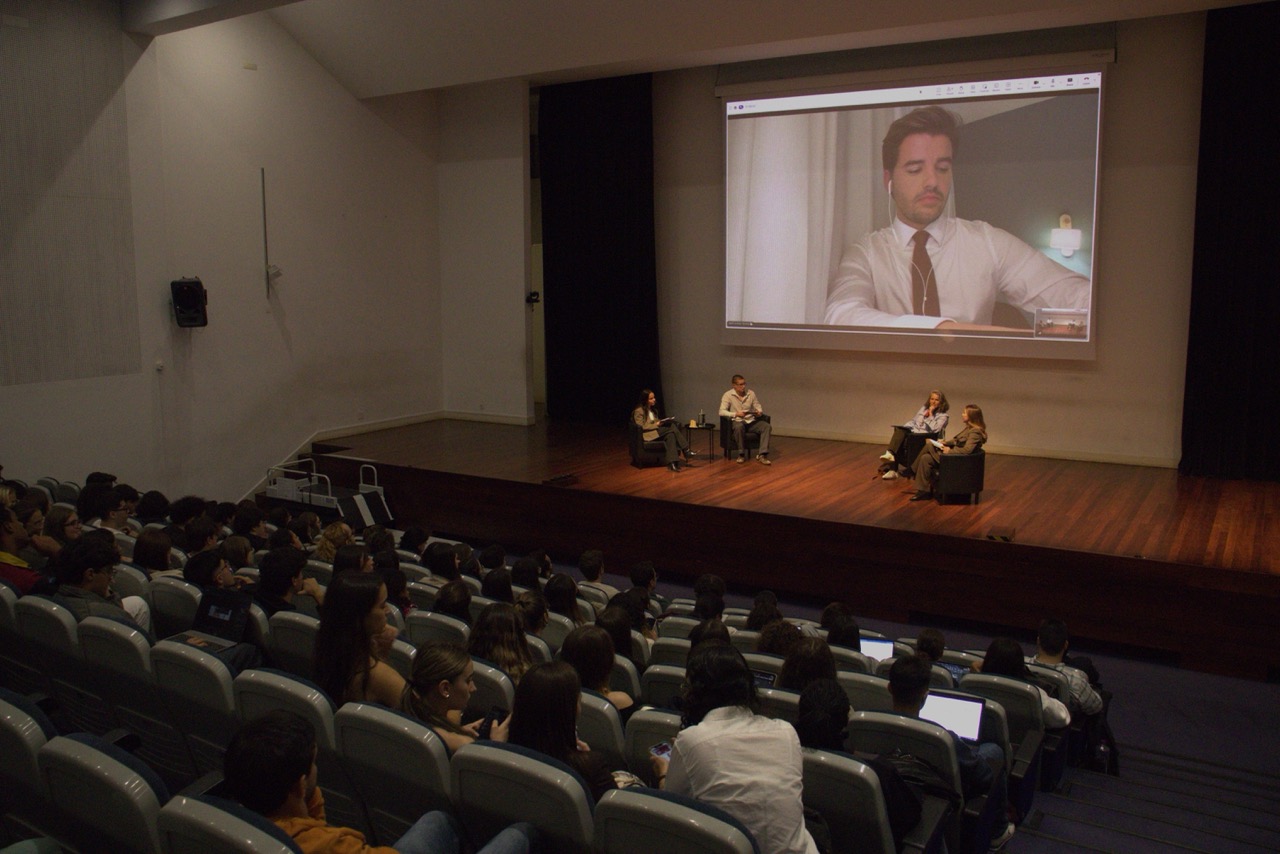
Journalists and ERC representative discuss how to bring Europe closer to citizens at ESCS
Rebecca Abecassis, journalist and editor of RTP’s European affairs programmes, António Assis Teixeira, TVI’s European correspondent, and Carla Martins, member of the Board of ERC – Portuguese Regulatory Authority for the Media, discussed the role of journalism in covering European affairs at the School of Communication and Media Studies (ESCS-UPL).
The debate, which also addressed disinformation and European media policies, took place during the conference “The Media, Journalism and Europe”, held on 27 October.
When covering European affairs, it is necessary to “break down complexity and bridge the gap between Brussels and Portugal”, argued António Assis Teixeira, who also warned against the risk of a “seated Europe”, where “it feels as though we are always in a conference room”. TVI’s European correspondent stressed that “the European Union has an impact on everything” that affects our daily lives, but there is not always enough airtime to cover these issues “without simply following the story of the day”.
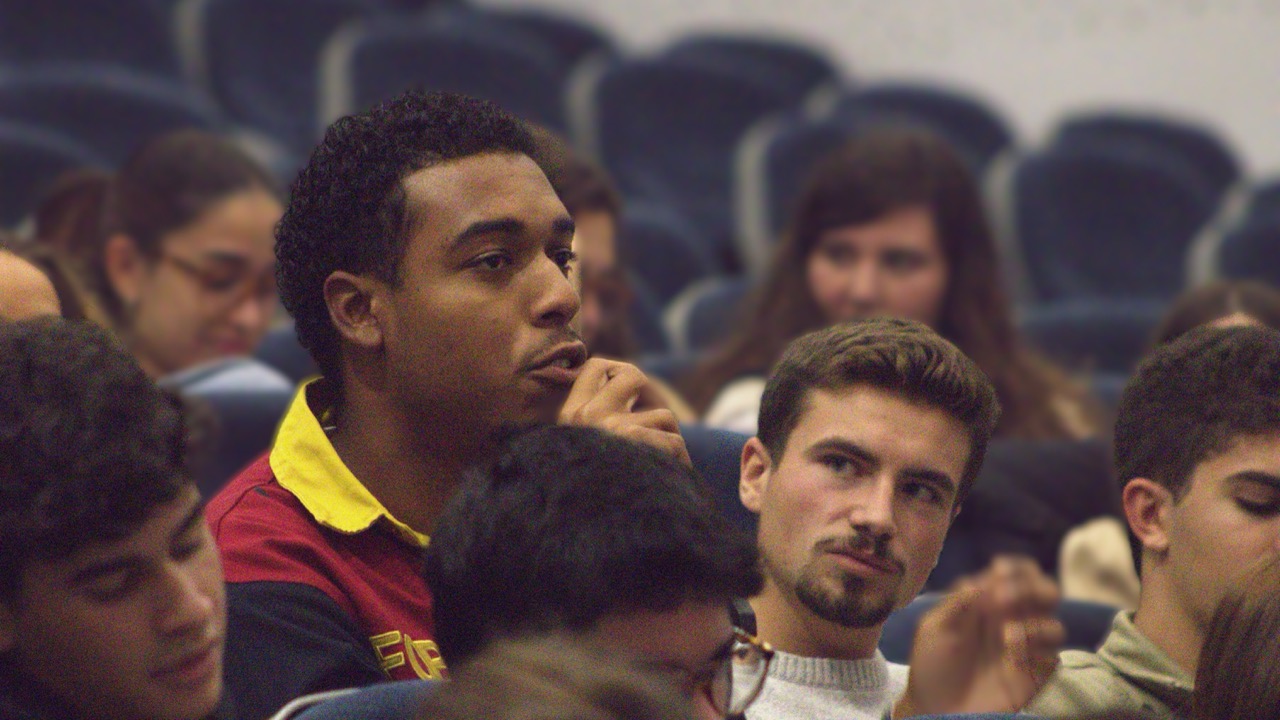
Addressing an audience of undergraduate and master’s students in Journalism, Rebecca Abecassis noted that there is greater interest in international politics today than when she began her career. The speaker highlighted the “proliferation of commentators” in the media, adding that “many of those commenting on European affairs are getting things wrong”. The journalist and editor of RTP programmes Terra Europa and Europa à Porta argued that “the European Union should be explained in primary education” and regretted the limited airtime devoted to topics outside the day’s news agenda. “People don’t know what the European Parliament is for; they think it’s just a cushy job, but there are people doing very good work,” she said.
Asked about the main priorities for media regulation at European level, Carla Martins highlighted the “major shift in legislative activity” brought about by the introduction of “legislation dedicated to media pluralism” – the EMFA (European Media Freedom Act), adopted in 2024. The ERC Board member also emphasised the regulatory challenges posed by the use of artificial intelligence in journalism, as well as the work the ERC has been carrying out with higher education institutions to “identify false content during the European elections”.
-
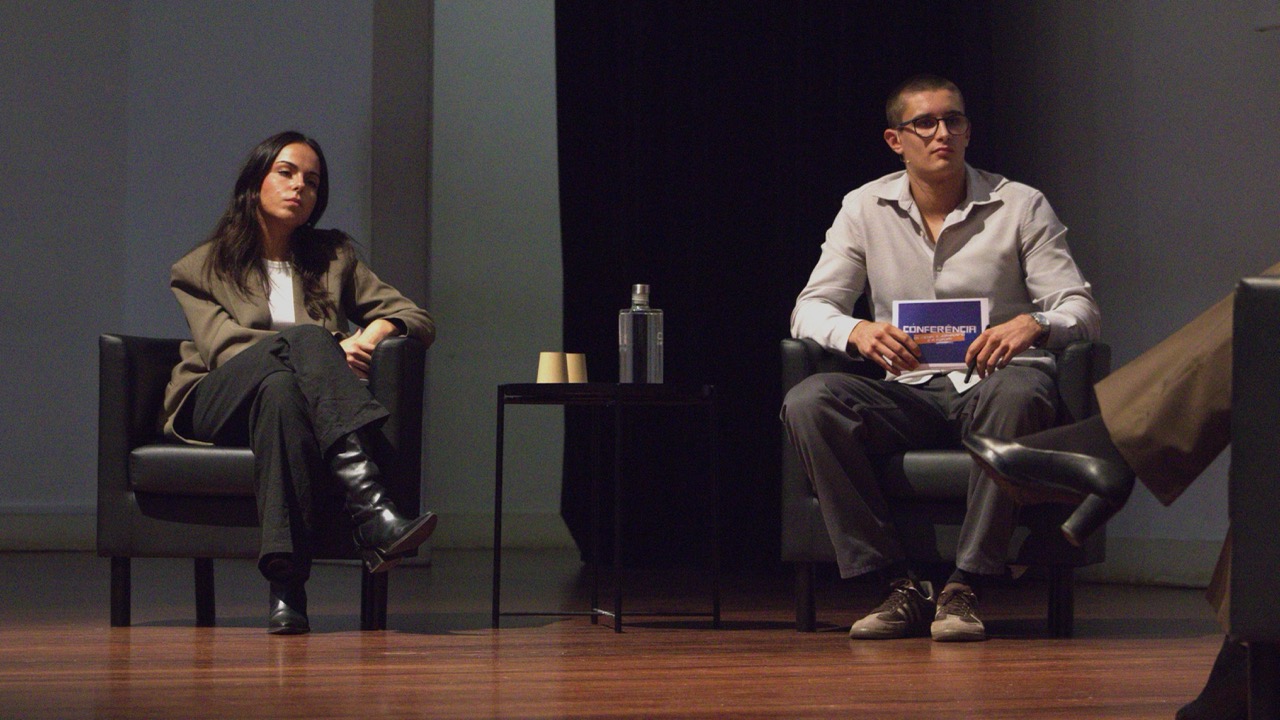
- Inês Valente and Fernando Peixinho, conference moderators.
-
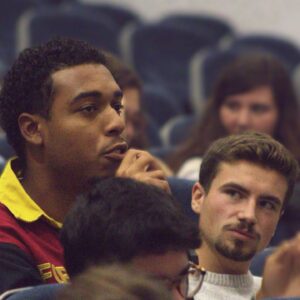
- Open debate to the public.
-
- Conference organised by the Media Systems course students.
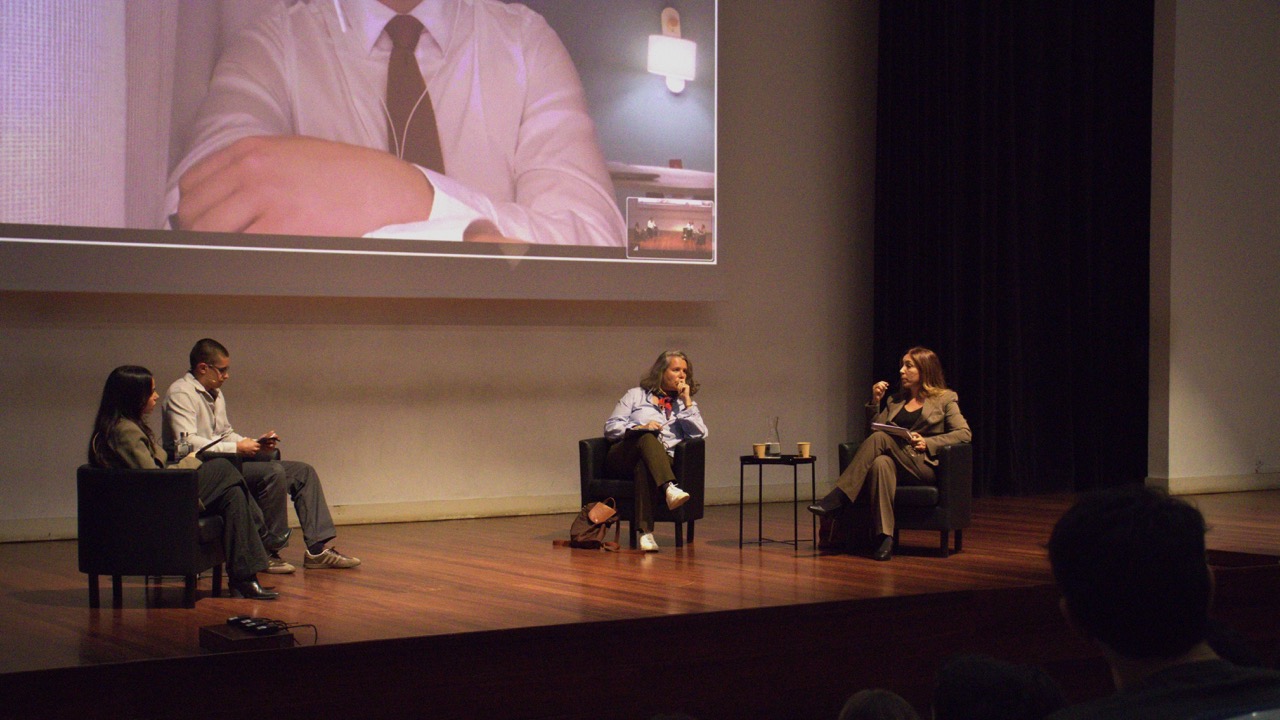
The conference “The Media, Journalism and Europe” was moderated by Fernando Peixinho and Inês Valente, final-year students of ESCS’s undergraduate Journalism programme. The event was organised by the Media Systems course students, and was included in the programme of activities of the UNESCO Chair of Communication, Media and Information Literacy and Citizenship (ESCS/LIACOM) for UNESCO’s Global Media and Information Literacy Week.
