
'/%3E%3C/g%3E%3Cuse%20href='%23c'%20transform='matrix(-1%200%200%201%20720%200)'/%3E%3C/svg%3E)
'/%3E%3C/svg%3E)
Discovering new stories about climate change at the European Researchers’ Night
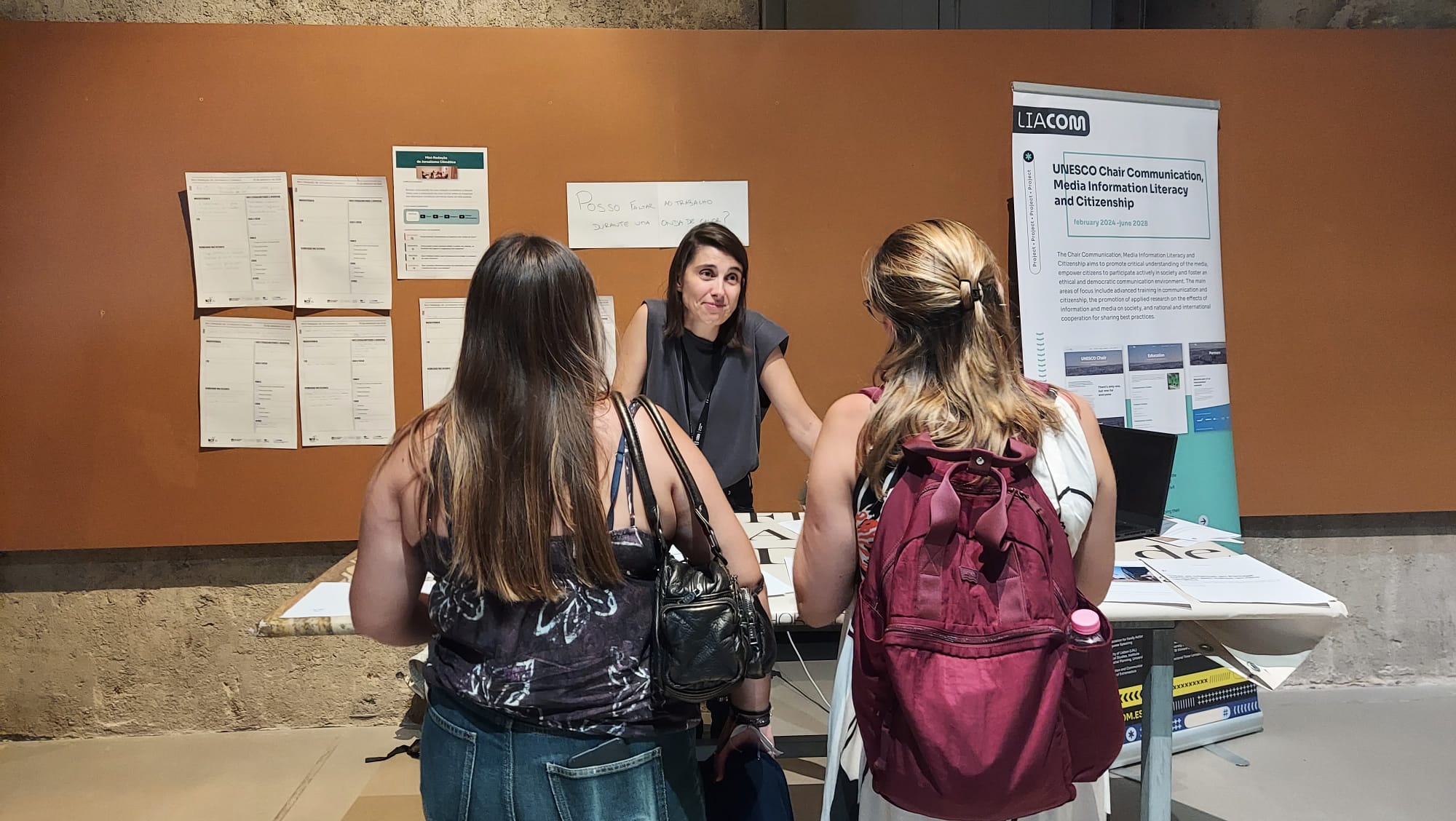
“What if you were a climate journalist for one night?” This was the challenge presented to participants at the European Researchers’ Night who took part in the activity organised by the UNESCO Chair of Communication, Media and Information Literacy and Citizenship (ESCS-UPL/LIACOM) on September 25 at the National Museum of Natural History and Science in Lisbon.
Almost fifty people, aged between 8 and 80, took up the challenge and explored how news stories can address different dimensions of the impacts of climate change.
The activity aimed to show that climate change is not only a scientific or environmental issue, but also a lens through which to observe different areas of public life: from health to politics, and from the economy to sports. The initiative also sought to highlight how journalists need to be able to “translate” scientific data and knowledge into news stories that bring the climate crisis closer to people’s everyday lives.
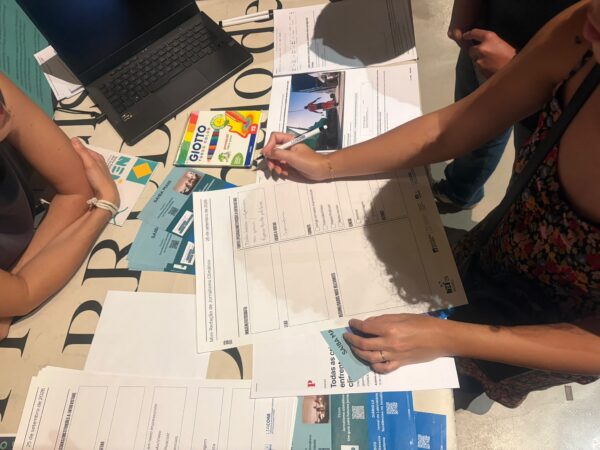
Using data shared by the team, participants were challenged to come up with an idea for a news report, interview, article, video, podcast, or another journalistic format, looking for an angle that is close to the reality in which they live.
Once they had chosen a topic, they had to identify the essential elements needed to develop the story: which sources should be interviewed, which places would be important to visit, what image could accompany the news story, which format would be most appropriate, and, finally, what the headline should be.
From the effects of heat on children to urban planning
The diversity of the audience attending the European Researchers’ Night was reflected in the variety of topics suggested for the news stories.
Health was one of the angles identified by participants. Inês, a 13-year-old girl who shared that she feels unwell in excessive heat, suggested producing a video and infographic explaining how heat affects children’s bodies, as well as investigating what solutions schools are considering to prevent students from being exposed to excessively high temperatures.
Also on the issue of heat, an older participant, Madalena, proposed investigating whether the Government’s labour reform includes measures to protect workers during heatwaves, particularly those who are more exposed to high temperatures, such as agricultural, construction and urban cleaning workers.
The same participant, drawing on her connection to the field of Art History, also suggested that it could be interesting to explore how changes in temperature and humidity associated with climate change may affect the conservation techniques used for works of art.
Sara and Maria Inês, a mother and daughter who still had the memory of the “train of storms” that affected the country in January and February this year, would like to see a report investigating whether changes have been introduced in urban planning following the events at the beginning of the year. The proposed headline was: “Should we plan our cities better in the face of more frequent flooding?”
But the conversations went beyond news story ideas. Throughout the evening, other participants also approached the team to discuss topics including journalism, science communication and the impact of artificial intelligence on newsrooms. The space thus became a starting point for broader conversations about the role of journalism in shaping the way society understands the complex issues of today.
That was precisely one of the objectives: to promote debate, climate and media literacy, critical thinking, and more informed civic participation.
The activity was led by LIACOM researchers Vera Moutinho, who coordinated the initiative, Fernanda Bonacho, Chairholder of the UNESCO Chair, and Fátima Lopes Cardoso, Journalism lecturer at ESCS, together with Margarida Alpuim, from the UNESCO Chair team.
The only climate journalism course in the country
The research project presented through the ESCS/LIACOM UNESCO Chair’s activity at the European Researchers’ Night was “Climate Journalism goes to the university: a cross-border project”, a bilateral exchange initiative coordinated by researcher Vera Moutinho (ESCS/LIACOM) and developed in 2024 in partnership with Oslo Metropolitan University (OsloMet), in Norway, with funding from the EEA Grants programme.
The project aimed to promote and strengthen the knowledge of journalism students and lecturers in higher education in the field of climate journalism. As part of the initiative, a Climate Journalism course was created within the ESCS Master’s Degree in Journalism, the only course specifically dedicated to this field in the country.
The existence of this course came as a surprise to some participants, who recognised the importance of preparing journalists to understand, communicate and think critically about one of humanity’s major challenges.
LIACOM’s participation in the European Researchers’ Night also included an activity dedicated to inclusive advertising, developed as part of the research project +LONGE: Consumption and Ageism: Expectations, Cultural Meanings, and Stereotypes in Advertising for Senior Consumers.
The European Researchers’ Night is an annual initiative held across Europe that aims to bring the public closer to scientific research by creating opportunities for experimentation, dialogue and participation.
View this post on Instagram
